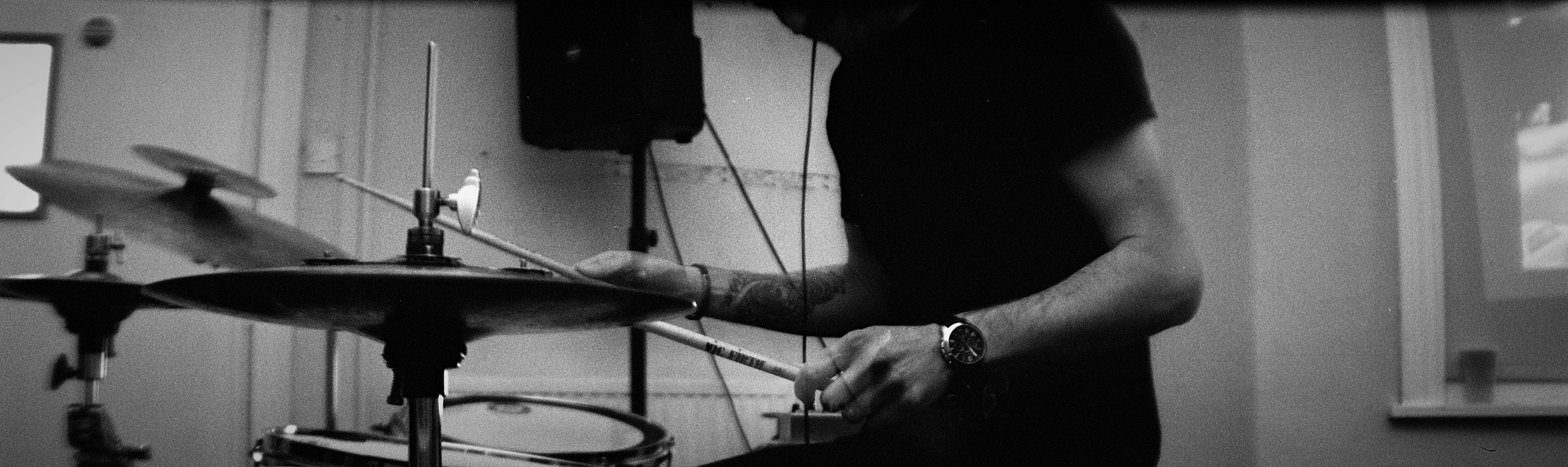
Life vs Creativity (1/4)

“…your standard day to day workings that take up your creative time.”

Many things can get in the way of our creativity. I often refer to this as ‘Life’; by this I mean your standard day to day workings that take up your creative time. If you’re one of the lucky ones who doesn’t have to deal with life in such way, then I salute you, you’ve hit the jackpot, but there are so many creatives I know that commonly struggle with this.

Creatives use their talents on a daily basis, but often struggle to create what they really want to themselves. Perhaps they’re a composer working hard writing music for film and television, but would prefer to be writing their own symphony. A cameraman filming daily, yet never directing their own film. A writer/journalist reporting everyday, yet never able to write their own story. I personally spent a year teaching music technology, only wishing the whole time to be making music for myself rather than teaching others.

“…should we really do this to our own detriment?’

Now this may appear selfish. Why have a talent and not use it to help others? This is true, and I agree that we should always help others when we can. We should use what we have learned in life to teach and guide others, but should we really do this to our own detriment? I recently had a conversation with someone about this such subject, people who study in order to go straight into teaching. It is something I can’t quite comprehend, as we all need to experience life in one way or another before passing on our experiences, and when moving straight into teaching after study, when have we had the time to experience the real world? Teaching is certainly a great way to earn a living and find fulfillment, but what does it cost in terms of our own creativity? Does it allow us to truly be creative for ourselves?

I’m not going to concentrate on teaching but thinking about that time in my life led me review my own ‘creative life’. I began to map out when I had been the most creative and what I was doing at that moment. Previously I’ve spoken about Planning Creativity which has been the first step to making sure I allow myself to be creative, but in the past I hadn’t needed to plan. It led me to think; “Why was that?”.

“…is it going to be a never ending battle between the two?’

As we grow older life begins to throw more and more our way. We may find a day job that we enjoy to earn our keep or a partner share our time with as we being to settle down. We begin to consider what the future holds for us, but where in that future is our creativity? Is there enough space to allow life and creativity to live happily side by side or is it going to be a never ending battle between the two?

This is a question that we have to decide for ourselves as it will never naturally sway either way. It involves our own discipline to get things done; to plan ahead and choose our own path in the creative world.

If you’re like me, and have decided for certain that you want creativity to be part of your life in a more established way, then over the next few blogs I’ll be going through a few steps I’m taking in order to achieve this. It involves dedication, discipline, time, organisation, inspiration, willingness, sacrifice, energy, and above all –  Patience.


Planning Creativity (4/4): Creative Sparks

Creativity comes as you achieve your goals in new, original and fun ways. Any planning you have made may not seem creative, but the process of planning itself can become creative and lead to the creativity you seek.

Let’s put this into context…

I started the 5th Spear website as an outlet for music, but simply releasing something once or twice a year won’t encourage anyone to come back and visit the site, so I thought that by blogging I could keep you all up to date with what I’m up to.

My new creative goal became –  ‘Blog More Throughout 2017′

I planned time to research I needed to both understand why I wanted to blog and how to do it successfully. This lead to planning subjects to write about, and by planning the subjects I decided that the basis for this blog would be creativity.

Through researching creativity, thinking about my own processes and revising advice I had read in the past, I actually came up with more subjects to write about; which lead to more writing and more research… My creativity had sparked.

Already planning had worked and I was writing blog post after blog post. Within no time I had around a years worth of blog content in drafts and new titles, so I needed to plan when I would publish them…

“Each month there will be four blogs related to a subject within creativity which I will publish once a week”

 However…

“Not every month has four weeks within it; some have five”

So I started to think about what I could do with the fifth week…

“Perhaps I could release some new music then?”

Planning blogs had swiftly transformed into planning to write and release new music. I had become more creative by planning to be creative; enabling me to come up with even more new ideas.

You may be wondering however –

“How are you being creative when all you are doing is planning to be creative?”

When you have a plan that is simplified so much that it is easy to achieve, it allows you to be playful again. You are being creative by making that plan, and you are being creative by completing it. The only thing which may stop this process is procrastination and your own discipline. By planning creativity and igniting that spark, you will find discipline to be an old hindrance, as you will be drawn to each simple task or item on the list with excitement; allowing you to easily complete your goal.

Then on to the next.

This is the last of four blogs I have published on the subject of ‘Planning Creativity’ which have been published throughout December. Alongside this I have planned on a new EP to be released in January 2017 (a month with 5 weeks), and will be launching the EP as part of  Independent Venue Week at Gwdihw Cafe Bar in Cardiff. Please come along and say hello.

Planning Creativity (3/4): Make It Simple

Grab a pen and paper…

  1. Write down at the bottom of a page a creative task that you would like to complete. This can be as simple or as complicated as you like; dependent on your field. The simpler the goal, the more steps you will probably find in planning. The more complicated goals probably mean that you have already partially planned.
  2. Next to it write down a reasonable deadline for the goal
  3. Above it, break down the goal into different tasks that will help to complete it (Eg. Does it require research? Does it require specific items? Does it require time? Does it require space?) Think of anything you can.
  4. Next to the tasks, break them down into simpler lists of what needs to be done to complete them.
  5. Assign shorter reasonable deadlines to the items on the lists.

If you gave yourself a reasonable deadline for your goal in the first place, then the amount of time associated with each list item and task should amalgamate together to equate to the required deadline of your goal.

You’re plan is the spark for your creativity.

Now you know exactly what’s to be done and when your creativity can begin to thrive. By taking an item from a list, you can be creative whilst completing that item, and thus complete a task in order to get one step closer to your goal. You may find it surprising how simple it can be to complete.

Personally I find that planning on paper or mentally really aids my process as it’s always good to have an idea of what needs to be done next. Sometimes however we over complicate what we need to do in our heads, and by writing them down it simplifies the act of deciding what needs to be done first or last; or what needs to be done sooner rather than later. Knowing what you are expecting to do will void the introduction of creative block into your dedicated time, and allow you to be playful.

Play with your ideas.

If you have a an item to complete on your list, give yourself time to be playful with it, be the unique-creative-original that you are and make notes as you go along. Don’t ever distract from your current goal. Avoid tangents and save them for a rainy day, as if they’re good enough you will find a new creative spark in continued planning for them at a later date. The aim with planning is to get something finished.

If it Doesn’t Work, Take a Step Back

If it doesn’t seem to work and you have that dreaded feeling of creative block, then take a step back and think about your plan. Maybe the plan was too simple? Was the goal too complicated? Or was the goal too vague? Utilise the time spent fighting creative block to plan further so that you can be even more creative when you come back to it, as doing this may help to spark your creativity again. Write lists about the lists, add tasks to your tasks, and you may find that there’s more that needs to be done in order to get started.

Review Your Plan

Lastly, take note of how in depth your plan needs to feel comfortable getting started. Each plan may be slightly different, but once you have an idea of how much planning you need to do, then you will have a great framework for next time. Knowing this will lead to having a better understanding of your own creative process enabling your workflow and productivity to improve.

Planning Creativity (2/4): Why It’s Important

“…we think that it isn’t as important.”

If you’re like me, life is generally busy, and creativity can often be pushed aside to make way for life. This is common for many people, especially as we grow older. If we haven’t ‘made it’ as a creative in the industry we desire, we think that it isn’t important anymore. However this can become frustrating, and more commonly depressing. I’m of the belief that this should never be allowed to happen as in the world of creativity there is always some form of outlet, and by being a creative we need to creatively find that outlet; or even design it ourselves. We can begin to help ourselves by planning to be creative, and finding our outlet will come when the time is right.

“…it naturally flows into mentally preparing yourself”

The advantage of planning a time to be creative is that it naturally flows into mentally preparing for the practice of being creative. If we plan the time to be creative, then any spare moment leading to that time can be spent thinking about how we might use it; and how to use it wisely. This could be as simple as deciding beforehand where you might practice your creativity, what sort of space you might like to surround you, what you might like to use, or how long it’s going to take to achieve a specific task in your chosen creative process.

“If we were to sit down to write a book, is there any point in beginning to write until we know what we’re meant to write about?”

Knowing the moment that we are planning to be creative aids us to prevent any subconscious temptation of a ‘creative block’ in our planned time…

Poor planning + No available time + A lack of discipline = Creative Block

A creative block comes when we sit down to work and we haven’t actually planned what work we are sitting down to do. We may have allowed the time, but if we were to sit down to write a book, is there any point in beginning to write until we know what we’re meant to write about? Or perhaps even to ask what we’re writing with? Something as simple as trying to find the correct tool to be creative with can invite the excuse of creative block into our domain, and again  this returns to the importance of needing to plan.

“…planning comes in the form of simplifying our process of being creative in order to allow us to be playful.”

Planning creativity is simply planning to do something, and that something will inevitably be something creative, but the importance of planning comes in the form of simplifying our process of being creative in order to allow us to be playful. The term ‘playful’ is used by many successful creatives, as it refers to the childlike joy that we feel whilst being creative. The joy of discovery, the joy of brilliance in our work, the joy and sense of pride in our creation and accomplishments. If we don’t give time to planing our creativity, this playfulness can become more difficult achieve and can result in being replaced with a continuing sense of frustration; which can lead to a deeper sense of depression.

“Invite the childlike joy into your creative time, and play.”

It’s important to feel excited about our work, and to be excited to be creative, as in essence this is the feeling that can get you out of bed in the morning. This is the feeling that encourages the element of playfulness that needs to be introduced into our creative time. Invite the childlike joy into your creative time, and play. Plan, simplify your process, demystify it, never use the excuse of creative block, and simply be creative.

Planning Creativity (1/4): Be Successful and Productive

“…you cannot simply wait for the right mood or the right atmosphere”

As a creative it’s hard to imagine simply switching on and off the creativity button. In fact, this is the way the most successful creatives in the world achieve their success. In order to be a successful creative you cannot simply wait for the right mood or the right atmosphere; you cannot wait for that specific event to happen that leads to inspiration or that new piece of tech or gear to arrive at your door. We don’t actually need anything to be the creatives we hope to be, all that it takes is the ability to mentally and/or physically engage in the act of being creative, and by planning to do so, we enable ourselves to be ready.

“If we have a plan of when to be creative and how to be, then writers block will never have its chance to get in the way.”

If you plan to be creative then it’s simple; you will be creative. The only thing that will hold you back is yourself. We need to stop believing that writers block exists, and instead consider our discipline, our bad habits, procrastination, our lack of confidence, our laziness, our disorganisation and an abundance of many other things that can be thrown onto that pile. If we have a plan of when to be creative and how to be, then writers block will never have its chance to get in the way. By allowing such things to get in the way, we in turn loose our productivity as creatives, as by not planning to engage in the act, we won’t produce a single thing to be proud of.

“…the only terms in which success can be achieved are your own.”

Now I’m not saying that by making a plan and sticking to it that you’re going to become a new born creative overnight, but what I will say is that you will see vast improvements in productivity, and somewhere along the line you will become a successful creative. The definition of ‘success’ can be a very personal one, and the only terms in which success can be achieved are your own. It’s up to you to decide what success truly means.

“…by planning to practice our art the more creative and productive we will become.”

There’s a common phrase sung by many that “Practice makes perfect”, and although I don’t quite believe that anything can be perfect, practice will certainly help any creative to improve. Practice helps to improve our defined art in creativity, and I say art, as most creativity evolves around it. Many forms of art are the most common forms of creativity, and thus by planning to practice our art the more creative and productive we will become through learning and honing our skills.

“…it helps us to mentally and/or physically prepare for what needs to be done.”

By planning you will find it easier to be a productive creative, as you will know when you are expecting to be creative rather than hoping to be, and this is Why Planning Creativity Works, as it allows our brains to understand the tasks that lie before us, and it helps us to mentally and/or physically prepare for what needs to be done. Planning allows us to break down our goals of success into simpler tasks which will enable our creativity to thrive and become successful, by speeding up our workflow and increasing the amount of time we actually spend being creative.